



During autumn, the amount of fallen leaves can vary significantly from one street or area to another. Different tree species shed their leaves at different times, while rain, wind and parked cars all influence where leaves eventually accumulate.
An effective leaf clearance programme therefore requires more than a fixed route plan. By combining good preparation with up-to-date information from daily operations, teams can adjust their approach throughout the leaf-clearing season. These five tips can help you work smarter.
1. Plan Around Tree Species and Leaf Fall
A large part of autumn leaf clearance can be planned in advance. You know where trees are located and which species tend to shed their leaves earlier or later in the season.
Use this information during work preparation to plan areas, routes and activities. This allows you to deploy sweepers and field teams at the locations and times where the most leaf fall is expected.
2. Account for Changing Conditions Outside
A good plan provides the foundation, but conditions outside do not always follow that plan.
Parked cars can make parking bays inaccessible, wet leaves can be more difficult to remove and wind can cause leaves to accumulate in unexpected locations. What teams encounter during execution therefore determines where additional attention is needed.
Combine a structured leaf clearance plan with the flexibility to adjust operations dynamically.
3. Make Completed and Outstanding Work Visible
To adjust effectively, planners need to know what has actually happened outside.
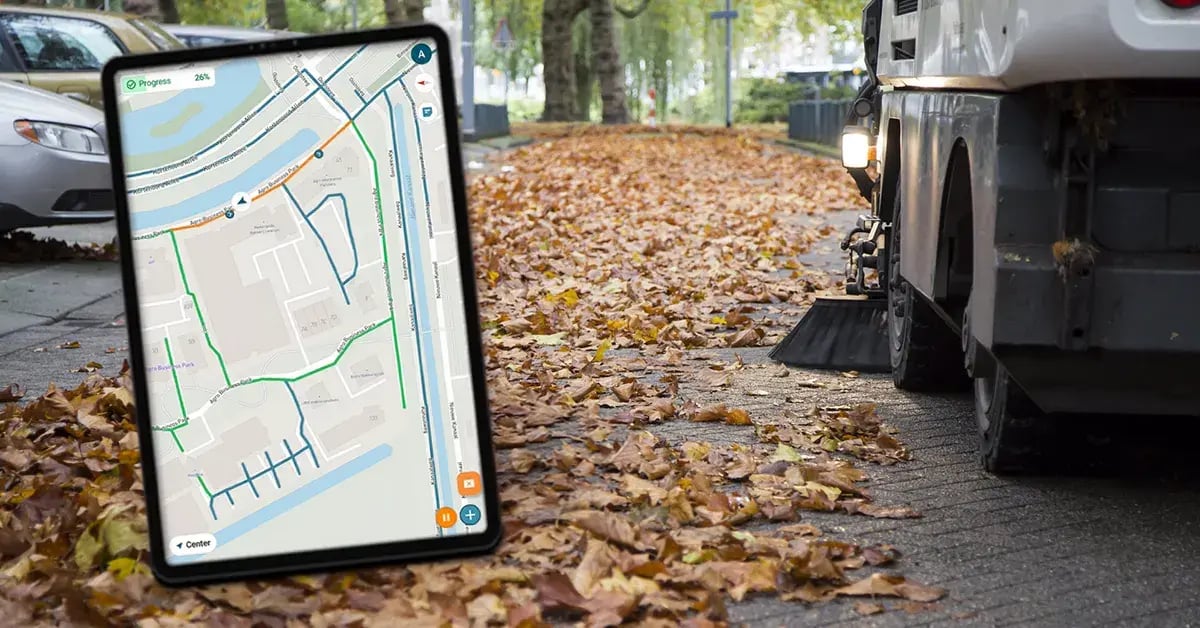
Field teams can record which tasks have been completed and where further attention is required. Was an area inaccessible because of parked cars? Were leaves left behind at a particular location? This information can immediately be made visible to the planner.
This gives office and field teams the same up-to-date operational picture.

4. Target Additional Work Where It Is Needed
With clear insight into progress, there is no need to repeat an entire route simply because a few locations were missed.
Planners can assign outstanding work directly to the appropriate team. This could mean sending a crew to manually clear hard-to-reach areas or scheduling a sweeper to return once a location becomes accessible.
This helps organisations use available capacity where it can have the greatest impact.
5. Prevent Problems After the Leaf-Clearing Season
Effective leaf clearance is about more than keeping streets looking clean. Leaves left behind can lead to complaints and accumulate around gullies and drains, potentially obstructing the flow of rainwater.
Organic leaf debris left on hard surfaces can also break down and create favourable conditions for weed growth. By following up on problem areas during the leaf-clearing season, teams can help prevent additional work later in the year.
Take Control of Leaf Clearance With Jewel Grounds Maintenance
With Jewel Grounds Maintenance, work preparation, planning and daily execution come together. Planners can monitor progress, while field teams can see where work needs to be carried out and report locations that require additional attention.
This allows organisations to combine a well-prepared leaf clearance plan with the flexibility to make targeted adjustments throughout the season.
Discover how Jewel Grounds Maintenance helps teams plan, execute and continuously improve leaf clearance and other street cleansing operations.


No Comments Yet
Let us know what you think