



Grounds maintenance is about delivering the quality agreed with the client. When an organisation takes on a contract, clear objectives are set for the work and the standard that needs to be achieved. The challenge is not only meeting those objectives, but also being able to demonstrate that they have been met.
Digital working makes this easier. Organisations can show where work is planned, which actions have been carried out and how the area is being managed. At the same time, better operational insight helps planners coordinate the work more effectively, making it possible to carry out more work while maintaining the required quality.
For local authorities and contractors, this creates greater transparency. Instead of relying on assumptions, both parties can see what has been planned, what has been completed and where further attention is needed.
When Nobody Knows Exactly What Has Been Done
Many organisations still rely on phone calls, handwritten notes or conversations with field teams to understand what happened during the day.
When a client asks whether a location has been swept or a reported issue has already been resolved, the answer often depends on asking the right person.
That costs time.
It also leads to unnecessary discussions about whether work has been completed correctly or whether it still needs to be done.
As grounds maintenance expert Jeroen van Ammers explains:
"Transparency is very important because reporting is live, so everybody knows what's done and what's the next job to do."
Operational Proof Instead of Assumptions
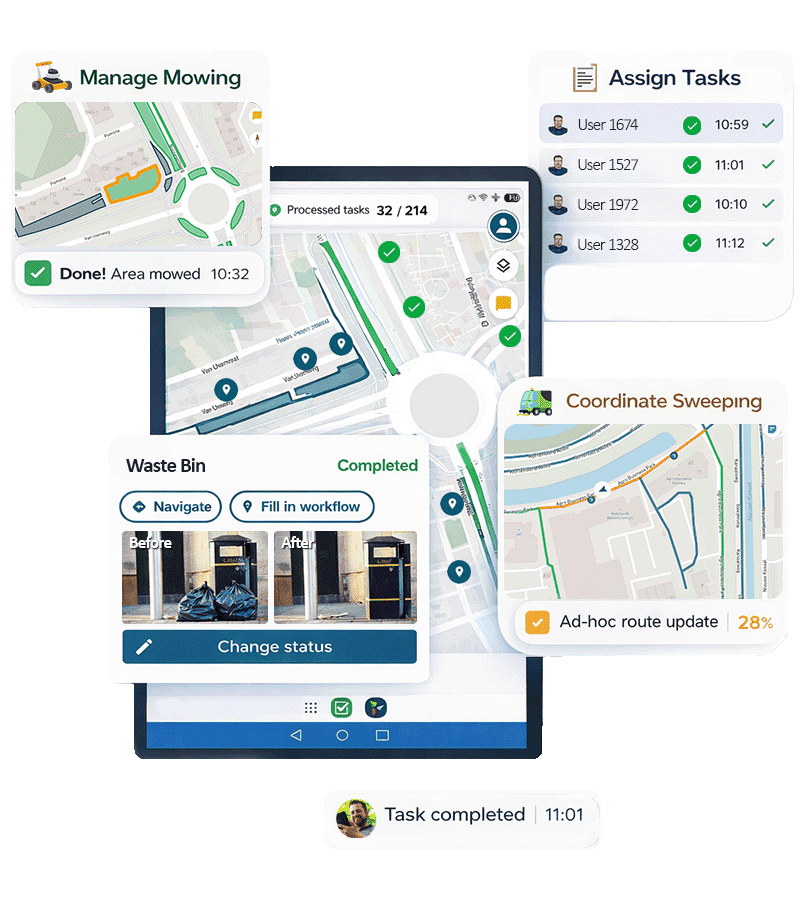
Digital reporting makes operational progress visible internally. Planners and supervisors can see what has been completed, what is still outstanding and which issues require attention.
That same insight can also be shared with the client, creating a shared and transparent view of the operation. Instead of relying on memory, phone calls or separate reports, both parties can work from the same up-to-date information.
This makes it easier to demonstrate progress, answer questions and show that the operation is being carried out according to plan.
Fewer Discussions, Faster Decisions
Having reliable operational information does more than simplify reporting. It creates clarity, both within the organisation and in collaboration with the client.
Internally, planners and field teams work from the same information, making it easier to track progress and coordinate what needs to happen next. That same information can be shared with the client, creating transparency about what has been planned, completed and still requires attention.
As Jeroen explains, access to the same live operational information helps reduce discussions both internally and with the client, because everyone can refer to the same facts.
Instead of spending time establishing what has or has not been done, teams can focus on the work that still requires attention.
Better Information Leads to Better Service
Operational reporting is not simply about recording completed work. It also provides the information needed to keep the wider operation under control.
When field professionals identify something that requires attention, they can report it immediately. Planners and supervisors can see what is happening, determine what needs to happen next and coordinate the appropriate follow-up. This insight can also be shared with the client, providing transparency into how issues are being handled.
As Jeroen explains:
“Detailed information helps the customer make better decisions. It makes the process easier and faster, and helps keep the entire work process under control.”
From Reporting Work to Proving Quality
As expectations around accountability continue to grow, organisations need more than completed routes.
They need to demonstrate what has been done, respond quickly to new issues and provide clients with confidence that work is being carried out as agreed.
Jewel makes that possible by connecting planning, execution and reporting in one platform. Field professionals record progress as they work, planners maintain a live overview of operations and local authorities always have clear insight into completed work and outstanding issues.
The result is fewer discussions, faster decision-making and a more transparent grounds maintenance operation.


No Comments Yet
Let us know what you think