



Grounds maintenance teams know the pattern. At the start of the season, operations feel manageable. Frequency-based work is planned and under control. But as April, May and early June arrive, weed growth accelerates rapidly and creates real pressure on the operation.
Not every area requires intervention during peak periods. In visually driven maintenance, large parts of the area may still meet agreed quality standards. However, without proper inspection and a clear overview, teams often treat entire zones as urgent. Capacity is deployed broadly instead of precisely, leading to unnecessary visits and reduced focus where action is truly required.
Seasonal peaks in grounds maintenance do not just create more work. They expose a deeper issue: limited visibility into assets, priorities and ownership. When teams cannot clearly see which locations fall below agreed visual standards and which do not, peak pressure quickly turns into reactive execution.
The Spring Surge: When Everything Grows at Once
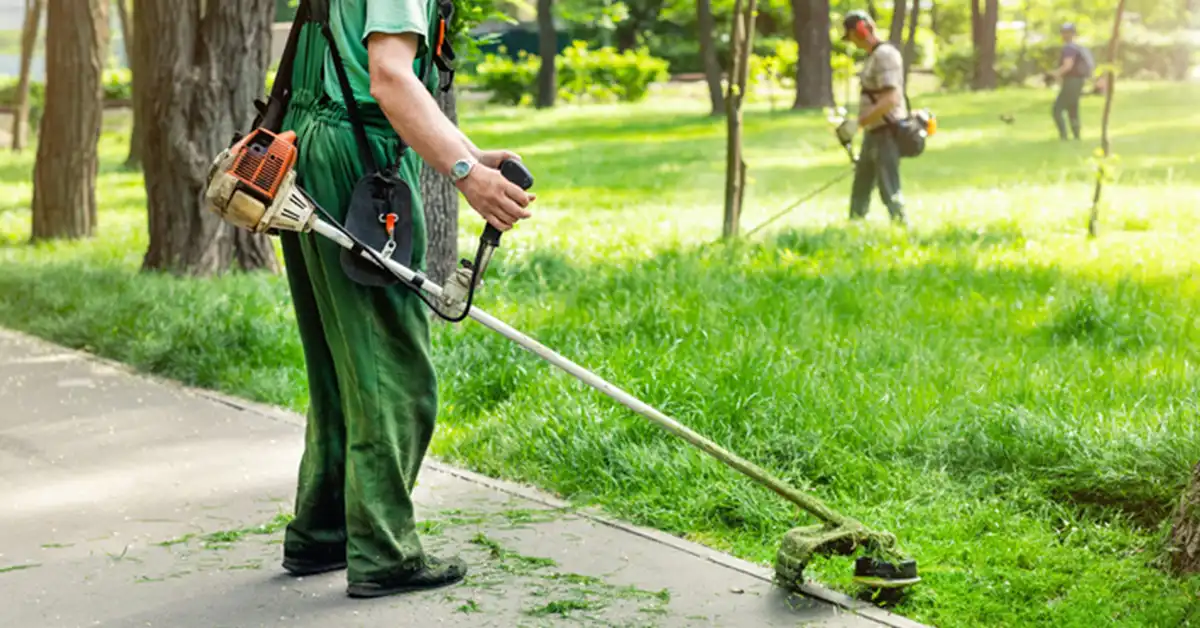
Between April and early June, weed growth accelerates explosively across hard surfaces and planting beds, creating concentrated operational pressure within a short timeframe.
Mowing and hedge trimming follow predictable frequency cycles. Peak pressure, however, is driven by sudden and simultaneous weed growth. Prioritisation becomes critical. Which locations are approaching or exceeding agreed visual quality standards and therefore justify immediate intervention? How can capacity be deployed only where threshold exceedance is imminent?
Without real-time data from execution, structured pre-inspections and objective image-based insight, operations inevitably drift into reactive maintenance.
Why Traditional Grounds Maintenance Planning Breaks Down
Many grounds maintenance operations still rely heavily on fixed planning cycles, particularly for weed control. While frequency-based structures provide predictability, they struggle to respond to sudden peak growth. Digital pre-inspections have supported planning decisions for years. Today, image recognition technologies further strengthen this approach, enabling more precise and efficient weed control.
During rapid peak growth, rigid planning models often fail to prevent quality exceedances. Without active steering based on real conditions, weed growth can quickly surpass agreed standards, leading to avoidable discussions with clients and stakeholders.
- Peak-driven weed pressure overwhelms teams without clear prioritisation thresholds.
- Supervisors lack structured insight into workload levels and struggle to determine when to scale or redistribute crews.
- Additional crews reduce efficiency when ownership and area familiarity are unclear.
- Decisions based on complaints rather than objective field data result in capacity being deployed in the wrong locations.
The result is misallocated effort and declining efficiency because resources are not focused where intervention is truly required.

From Reactive Maintenance to Proactive Grounds Maintenance
The difference between reactive and proactive grounds maintenance lies in operational visibility and coordinated action.
Proactive maintenance planning enables teams to:
- Clearly see which locations fall below agreed visual quality levels and require intervention, and which areas consistently remain within standard.
- Maintain clear insight into the remaining workload, enabling structured prioritisation based on urgency, quality levels and available capacity.
- Dynamically reassign and scale work across teams during peak pressure.
Instead of responding to complaints or calendar cycles, supervisors prioritise based on actual workload and performance data.
Grounds maintenance software supports this transition by digitising routes, tasks and maintenance levels, providing real-time insight into workload distribution and capacity requirements. Cities like Bruges (Belgium) have continuously refined this approach and are achieving impressive results.
Using Data to Manage Seasonal Complexity
Modern grounds maintenance software goes beyond scheduling. It supports priority modelling, workload forecasting, live progress tracking and optimised route planning.
Image recognition enhances decision making by analysing weed growth during peak pressure, enabling objective intervention decisions instead of fixed cycles.
This structured, data-driven approach allows teams to learn from previous seasons, refine forecasting and continuously improve operational performance.
%20(1).png?width=712&height=712&name=Jewel%20Website%20Diagram%20Grounds%20Maintenance%20(1)%20(1).png)
Empowering Teams During Peak Season
Seasonal growth will always create pressure. Chaos is not inevitable.
When teams share real-time insight, collaborate effectively and operate from structured planning tools, seasonal peaks become manageable rather than disruptive.
Proactive grounds maintenance is not about working harder. It is about focusing effort where it delivers the greatest impact.
With that focus, teams maintain control even under growing complexity.


How Bruges Uses Technology to Keep Public Spaces Clean and Safe
Summer strikes- how to control the planning of grounds maintenance?


No Comments Yet
Let us know what you think