



Storms Austen and Boelo have caused widespread disruption across Europe in recent days. Fallen trees, broken branches and debris have blocked roads, cycle paths and pavements, creating additional work for local authorities and grounds maintenance contractors.
For operational teams, this means unexpected tasks on top of an already busy schedule. The first priority is clear: remove immediate hazards and restore public safety. But once the most dangerous situations have been addressed, another challenge begins. How do you coordinate the remaining clean-up work and make sure no locations are overlooked?
Storm Damage Requires Flexible Grounds Maintenance Operations
After a storm, planners and field teams need to respond quickly. While specialist crews remove dangerous trees, other teams collect fallen branches and debris from streets, cycle paths and pavements.
Branches are often gathered into piles at accessible locations before collection vehicles return to remove them.
Without a clear overview of these locations, this becomes a time-consuming process. Drivers may need to check entire streets to find the piles. If a location is missed, another collection trip may be necessary, or the problem only becomes visible when a resident reports it.
The challenge is therefore not simply clearing storm damage. It is coordinating the different tasks and teams involved in restoring public spaces.

From Individual Reports to Coordinated Action
Storms cannot always be predicted, but the response to storm damage can be prepared.
By establishing a clear workflow in advance, grounds maintenance teams can respond more effectively when additional work arises.
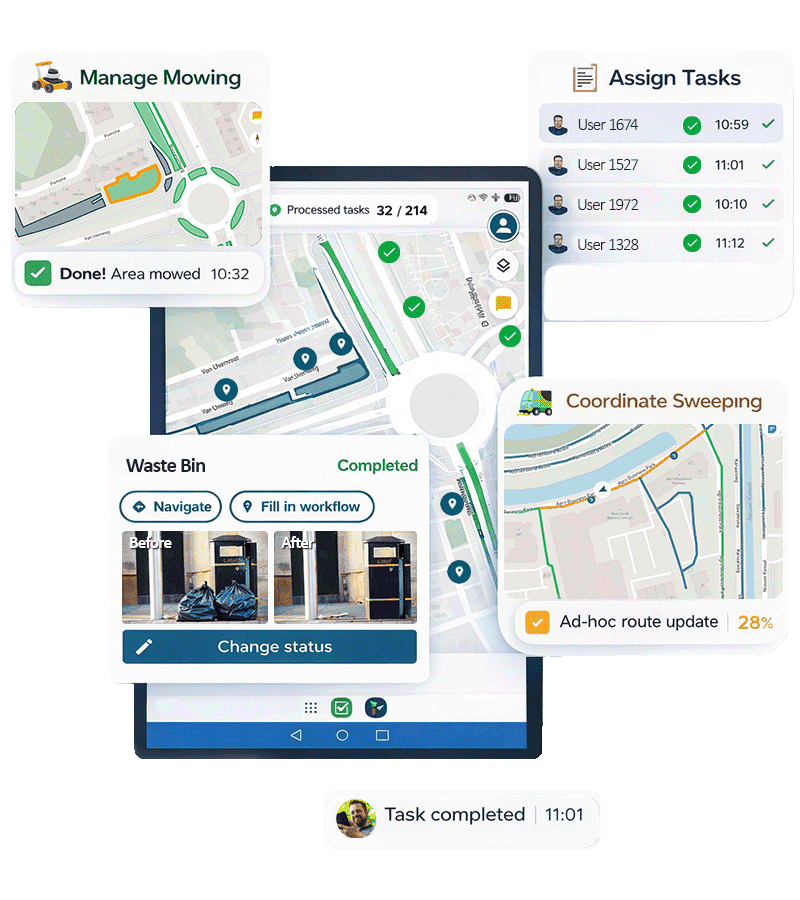
Field professionals can record where branches have been collected, mark the location on a digital map and add photographs to show the amount of debris.
Planners can use this information to assess the required capacity and assign collection tasks to the appropriate vehicles and crews.
Drivers then see the locations directly on their tablets and mark each task as completed once the branches have been removed.
This creates one shared overview of outstanding work, helping teams avoid unnecessary journeys and overlooked locations.
Keeping Daily Operations on Track
Storm damage does not replace the work that was already planned. Street cleansing, grounds maintenance and other routine activities still need attention.
That makes prioritisation essential.
With up-to-date information from the field, planners can identify which tasks require immediate attention, where additional capacity is needed and which activities can temporarily wait.
By connecting information from the field with daily planning, organisations can respond to unexpected situations without losing control of their wider operation.
Managing Storm Damage With Jewel Grounds Maintenance
With Jewel Grounds Maintenance, work preparation, planning and daily execution come together in one shared operational environment.
Using Jewel Tasks, field professionals can record storm damage with locations, photographs and additional information. Planners can turn these observations into clear tasks and assign them to the appropriate teams. Drivers can then see exactly where work remains and report progress directly from the field.
This connects the knowledge of field professionals with the information planners need to coordinate the operation effectively.
Discover how Jewel Grounds Maintenance helps local authorities and contractors coordinate storm damage clean-up while keeping daily grounds maintenance and street cleansing operations under control.


Storm damage? This is how you clear up loose branches more quickly

Why Manual Tools Fail Under Pressure in Waste Collection


No Comments Yet
Let us know what you think