



Collection plans have always existed in waste collection operations. Every organisation has a plan that defines routes, schedules and service areas. But in many cases, the operational knowledge behind those plans is not properly embedded in a system.
According to waste collection expert Koen Dijkhuis, this creates a hidden risk for many organisations.
“What you see is that the plans are mostly in the head of a few people.”
These individuals know how routes work, where operational challenges occur and how changes should be implemented. While this expertise is extremely valuable, it can also become a bottleneck when operations need to adapt.
When Experience Becomes a Bottleneck
Waste collection operations rarely remain static. Legislation changes. New contracts are introduced. Residential areas expand. Disposal locations may change.
Each of these developments requires adjustments to the waste collection plan.
When planning knowledge is concentrated in a few individuals or stored in paper-based systems, making those adjustments becomes slow and difficult. Organisations often postpone changes because modifying the plan requires significant manual effort.
As waste collection expert Koen Dijkhuis explains:
“These key people have the knowledge and they are a bottleneck in making changes.”
At the same time, organisations become increasingly vulnerable when experienced employees leave or retire, because valuable operational knowledge disappears with them.
Over time, this limits flexibility, slows down improvement and makes it harder for organisations to adapt to change.
Why Flexibility Matters in Modern Waste Collection
Modern waste collection operations need to respond continuously to change. Routes may need to be adjusted when new neighbourhoods are built. Contracts may require different collection schedules. Drivers may provide feedback that reveals more efficient ways of organising routes.
When planning exists only on paper or in fragmented documents, adapting to these changes becomes complicated.
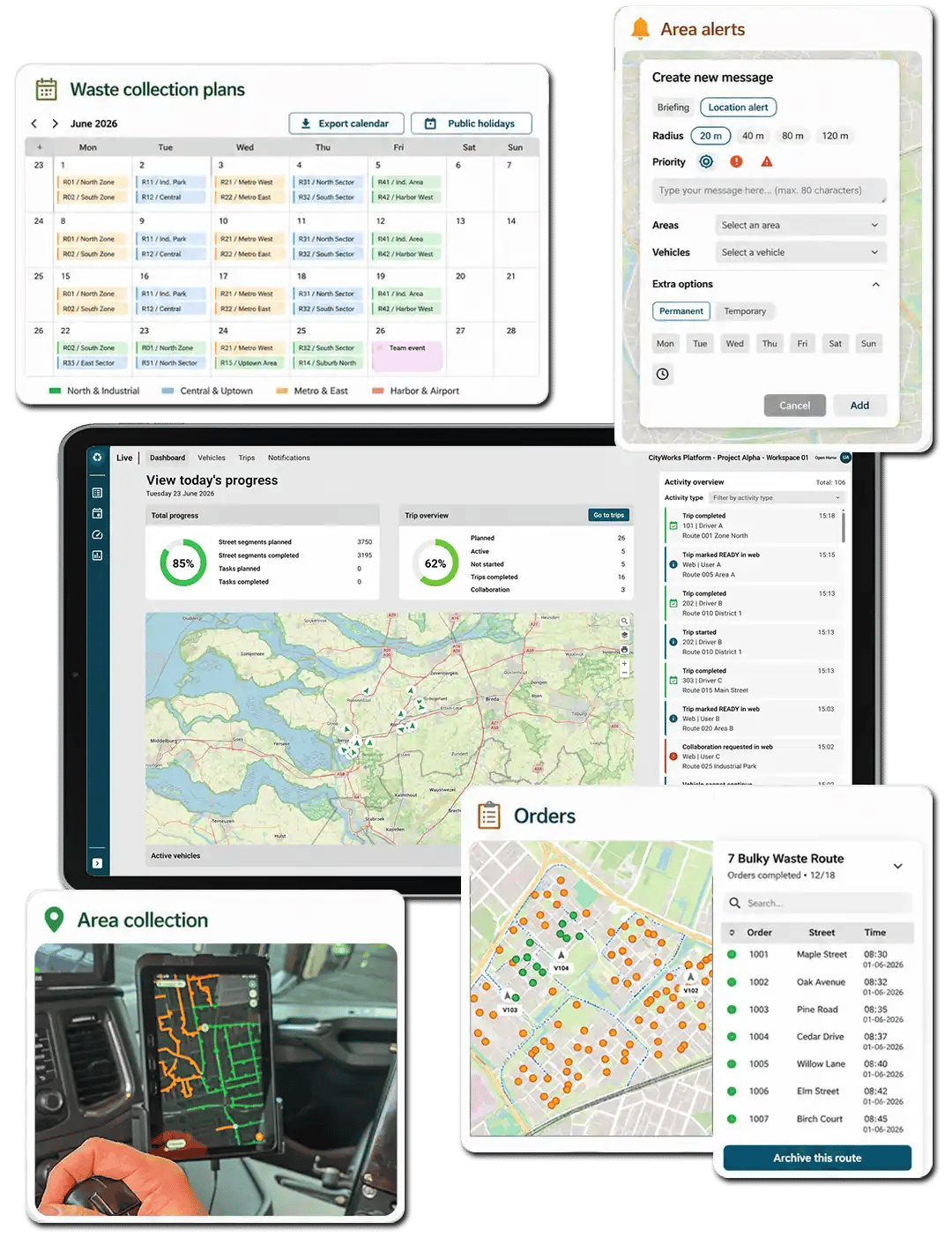
Digital planning environments allow organisations to work differently. Instead of rebuilding a plan from scratch each time something changes, planners can work with structured data and adjust scenarios within the system.
Scenario Planning Instead of One Fixed Plan
One of the biggest advantages of digital waste collection planning is the ability to create and test scenarios. While crews continue working with the current operational plan, planners can develop alternative collection plans in the background based on real execution data from daily operations.
This is where digital planning becomes especially valuable. Many organisations initially look for software to support execution in the field, but the ability to explore and compare planning scenarios also creates major advantages for work preparation and long-term optimisation.
As waste collection expert Koen Dijkhuis explains:
“The data collected during daily operations can be used to continuously improve collection plans.”
This allows planners to test improvements before implementing them and better understand how changes will affect the operation.
Continuous Improvement Instead of Big Change Projects
Traditionally, organisations treat planning changes as large projects. Adjustments are prepared far in advance, require significant effort and are only implemented at specific moments in time.
Digital optimisation tools change this dynamic.
Because routes, operational data and planning structures are connected within one system, planners can continuously optimise waste collection plans based on new operational insights. Improvements no longer need to wait for large redesign projects, but can be introduced gradually as the operation evolves.
This is where digital planning creates value beyond execution alone. While many organisations initially look for software to support daily operations, the ability to optimise and continuously improve collection plans also delivers major advantages for work preparation and strategic planning.
As a result, some organisations now adjust parts of their waste collection plans on a weekly basis instead of waiting years for major changes.
Planning That Evolves With Your Operation
Waste collection plans should not be static documents. They should evolve as operations evolve.
Digital waste management software enables organisations to capture operational knowledge, test new planning scenarios and implement improvements more quickly.
Discover how our waste management software helps organisations build flexible waste collection plans and adapt routes with confidence. You can also download the waste collection product sheet to explore how digital planning supports more resilient waste collection operations.

How people and technology reinforce each other: the collection of the future
How to Manage Seasonal Peaks in Grounds Maintenance Without Losing Control


No Comments Yet
Let us know what you think