



Unexpected situations happen every day. A resident reports an issue, a machine breaks down or priorities suddenly change.
Without a clear overview of what is happening outside, planners spend valuable time calling teams, checking progress and figuring out who is available. The longer that takes, the longer the issue remains unresolved.
As grounds maintenance expert Jeroen van Ammers explains:
"In the case of an incident, it's very important to know where my people are. Which person or machine can I choose to collaborate on that task?"
One Shared Picture of the Day
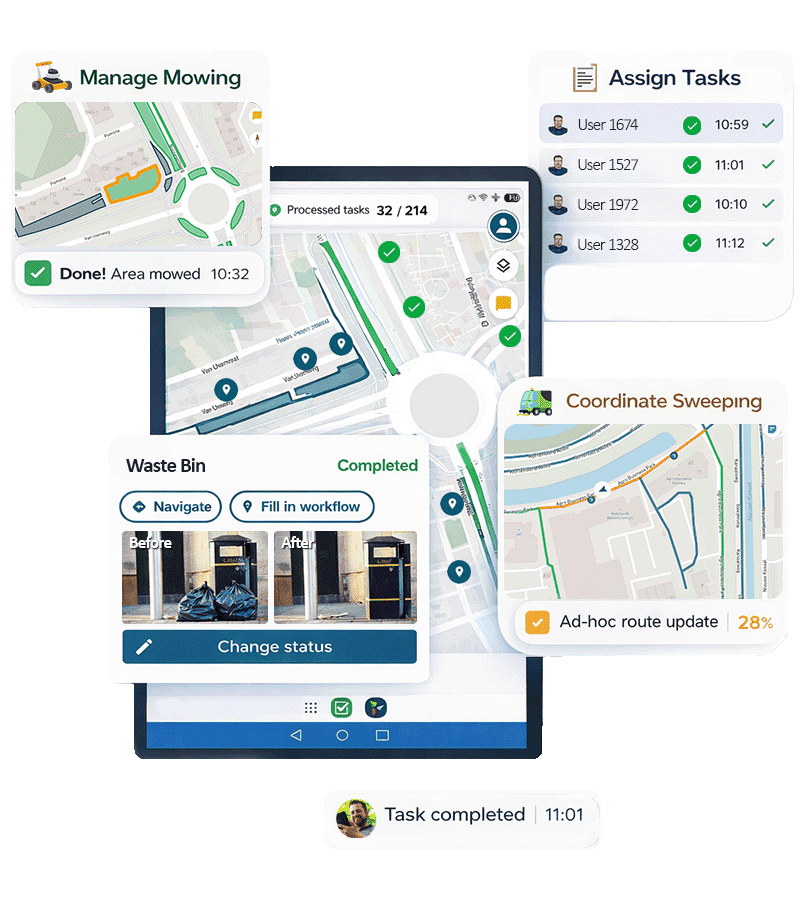
Grounds maintenance and street cleansing are team efforts. For those teams to work effectively, it is essential that planners in the office and field professionals work from the same source of information.
This shared operational picture gives field professionals clear priorities for their daily tasks, while planners can see how work is progressing across the operation. Based on this progress, planners can identify where support is needed and where teams have capacity to help each other.
With a clear view of daily tasks and their progress, planners can make informed decisions about when and where to initiate collaboration. This allows teams to support one another at the right moment while keeping the overall operation on track.
Helping the Right Team at the Right Time
They help planners connect people.
Whether responding to an incident, reallocating work or supporting another crew, decisions are based on what's actually happening in the field instead of assumptions.
As Jeroen explains:
"When the planner has a clear overview of what's happening and the progress on the different routes, he can tell people to collaborate and do it at the right time."
The result is smoother collaboration, faster responses and daily operations that remain under control even when plans change.
Building More Resilient Daily Operations
Unexpected situations are part of every working day and create constant dynamics in the execution of grounds maintenance and street cleansing operations. The challenge is making sure these changes cause as little disruption as possible.
When planners and field professionals work from the same real-time information, they can respond quickly, adjust priorities and support one another without unnecessarily disrupting the rest of the day's work.
Discover how Jewel connects planners and field teams through one shared operational picture, helping organisations respond effectively to daily dynamics, improve collaboration and keep grounds maintenance and street cleansing operations running smoothly.

How to Manage Seasonal Peaks in Grounds Maintenance Without Losing Control
Why Is It So Hard to Replace an Experienced Field Worker?

No Comments Yet
Let us know what you think